
Is Ninjutsu a Martial Art?
A Historical and Practical Inquiry into the Nature of Shinobi no Jutsu and the “art of Ninja”.
When most people hear the word Ninjutsu or Ninja, they envision black-clad warriors hurling shuriken, scaling castle walls, or vanishing into smoke. These images—shaped more by postwar cinema and pulp fiction than by historical record—often obscure the reality. In truth, Ninjutsu was not a codified martial art in the classical Japanese sense. It was a collection of battlefield tactics and covert operational skills, practiced by specialized personnel in service of military lords (daimyo). Its origins lie not in the structured rituals of the dojo, but in the strategic demands of survival, infiltration, and psychological disruption.
This article examines the historical record, regional applications, and eventual codification of Ninjutsu to evaluate whether it qualifies as a martial art—either under feudal standards of bujutsu, or through modern adaptation and formalization.
Understanding Classical Standards
Defining Martial Arts in Historical Japan
In classical Japan, a martial art—referred to as bujutsu—was defined not only by its techniques, but by its structure, pedagogy, and verifiable lineage. Recognized ryuha (schools) taught codified movements and tactics known as kata, often focused on battlefield application. These were preserved and transmitted through written documents (densho) and hierarchical licensing systems (menkyo), which formalized a student’s progression.
These arts were typically practiced in dojo under the guidance of an established teacher, and were expected to embody not just physical skill, but a deeper philosophical and moral discipline. The transmission system helped preserve martial integrity over generations—distinguishing bujutsu from ad hoc or improvised forms of combat.
What the Records Actually Say
What Was Ninjutsu Historically?
The original term used in historical texts was Shinobi no Jutsu (忍の術), meaning “the techniques of endurance or concealment.” Ninjutsu referred not to a standalone martial art, but to a series of fieldcraft and covert operations related to reconnaissance, sabotage, infiltration, escape, and survival.
These methods are documented in Edo-period sources such as the Bansenshukai (1676), Shoninki (1681), and Ninpiden. Each describes specific skills suited for strategic disruption—not unarmed combat or dojo-based pedagogy.
No evidence suggests that a widespread, formalized Ninjutsu ryuha existed during the feudal period with kata or licensing in the way other bujutsu systems operated. Rather, the term Ninjutsu came to encompass a loose collection of tactical skills, often contextual and regional, rather than a unified martial curriculum.

Regional Practice and Tactical Specialization
Historical shinobi activity was largely regional. The Iga and Koka provinces are the most commonly cited areas with recorded shinobi operations. Local families passed down practical techniques orally or through sparse, utilitarian writings—not through the structured densho or menkyo systems used in classical bujutsu.
Some groups specialized in specific tactics such as climbing, disguise, or sabotage, depending on local needs and military assignments. These were not formal martial art schools but rather functional skill sets, integrated within broader social and military frameworks.
The Codification of Ninjutsu in the Modern Period
In the 20th century, various older systems of battlefield tactics, survival skills, and combative methods were reorganized and formalized under the name “Ninjutsu.” These newer systems introduced structured curriculum, including unarmed combat, weapon kata, and philosophical training.
While not recognized as koryu (classical schools) by traditional definitions, they mirrored many pedagogical elements of established budo forms. Often drawing from overlapping lineages and regional oral traditions, these systems helped reframe Ninjutsu as a martial discipline—despite its historically irregular and utilitarian origins.
A Philosophical Evolution
From Ninjutsu to Ninpo
The transformation from Ninjutsu (technique) to Ninpo (principle) marked a philosophical shift—from battlefield utility to personal discipline and ethical development. Rather than a toolbox for infiltration or sabotage, Ninpo reframed the shinobi arts as a path of moral clarity, endurance, and self-control.
This change mirrors the broader trajectory of Japanese martial traditions. Just as kenjutsu became kendo, jujutsu became judo, and kyujutsu evolved into kyudo, the idea of Ninpo helped reshape Ninjutsu into a budo form rooted in self-mastery rather than warfare.
These modern adaptations often emphasized values like humility, perseverance, and harmony with natural law. The framing of Ninpo allowed these systems to align more closely with the ethos of 20th-century budo, emphasizing inner cultivation over covert tactics.
A pivotal figure in this transition was Takamatsu Toshitsugu, a martial artist active in the early 20th century with formal training in multiple classical ryuha. Takamatsu integrated battlefield tactics from various traditions into a cohesive body of knowledge and emphasized the moral and spiritual aspects of martial practice. His framing of martial arts as a life path—rather than merely a combat skill set—helped align the shinobi legacy with the evolving structure of modern budo.
In the 1970s and 1980s, the term ‘Ninpo’ became publicly known through one of his students, reflecting a modern reframing of the philosophical aspects already emphasized in Takamatsu’s teachings. In later decades, some systems moved away from the terms “Ninjutsu” and “Ninpo” entirely, favoring the broader label “Budo Taijutsu” to describe a curriculum of integrated unarmed techniques rooted in traditional combative ryuha. This shift emphasized classical movement and combative theory over the historical baggage associated with ninja folklore, aligning the art more closely with the technical and spiritual ideals of modern Japanese martial disciplines.
Carrying the Legacy Forward
Ninjutsu began as a tactical toolkit for survival, infiltration, and sabotage—not a martial art in the formal sense. But over time, it evolved.
Modern systems that build from this legacy and incorporate structured pedagogy, combative application, and ethical discipline can rightly be seen as martial arts.
At the Kobukan, our training carries this evolution forward—not by romanticizing ninja folklore, but by preserving the spirit of authentic transmission.
Our approach seeks to reflect the direct vision of Takamatsu’s legacy: practical, combative methods rooted in classical ryuha, taught with clarity, purpose, and integrity, without the noise and confusion surrounding this legacy that’s come in the last few decades.
In doing so, we honor the past while preparing for the realities of modern budo.
Read Other Recent Blog Posts

Explaining Martial Arts | A Guide for Instructors on Speaking to New Students
Resources for Instructors Explaining Martial Arts | A Guide for Instructors on Speaking to New Students A Kobukan guide to help martial arts instructors explain training clearly to beginners, parents, and prospective students—while honoring tradition. Contributed by…
Jujutsu vs Jiu-jitsu | From the Battlefield to the Mat
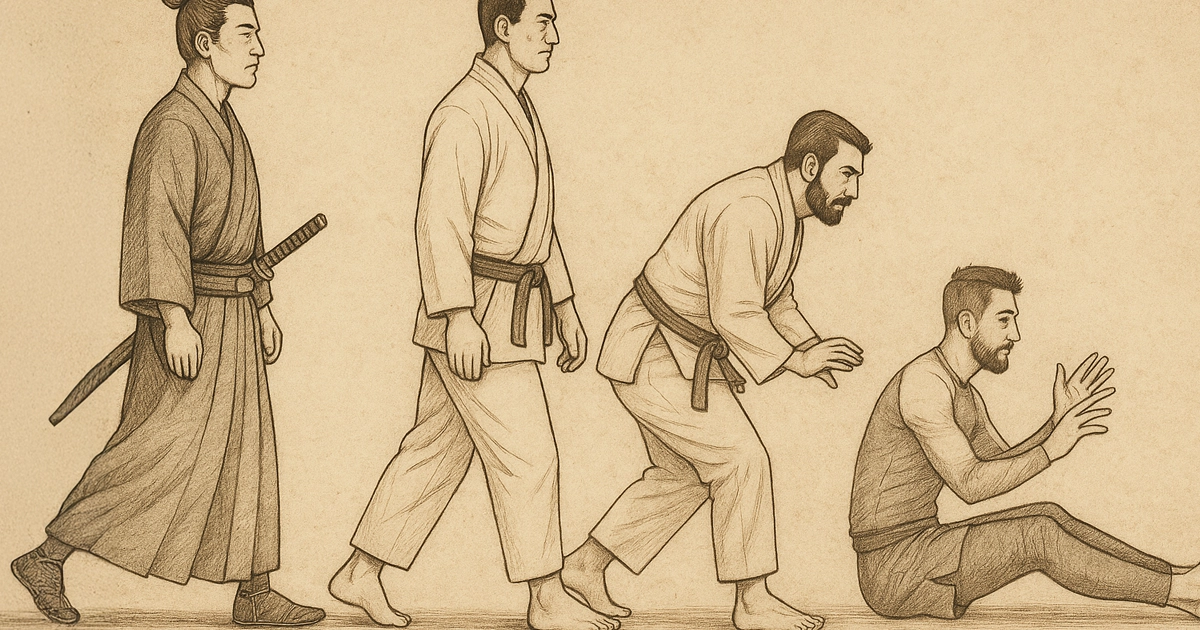
Jujutsu vs Jiu-jitsu A Perspective of Martial Evolution —Comparing Styles and Change from Battlefield to Mat Over the last few decades, Brazilian Jiu-Jitsu (BJJ) has become one of the most prominent martial arts worldwide—known especially for its focus on ground…

Aly Rustom on Jujutsu and Ninpo in Saitama | Kobukan Voices
Kobukan Voices Aly Rustom on Jujutsu and Ninpo in Saitama, Japan Real voices from the Kobukan—students and instructors sharing their stories, insights, and what makes traditional martial arts worth preserving. Aly Rustom is a well-known member of the Kobukan Kobudo…